Fear Is the Hardest Trick to Land: Inside the Mental Game of BMX
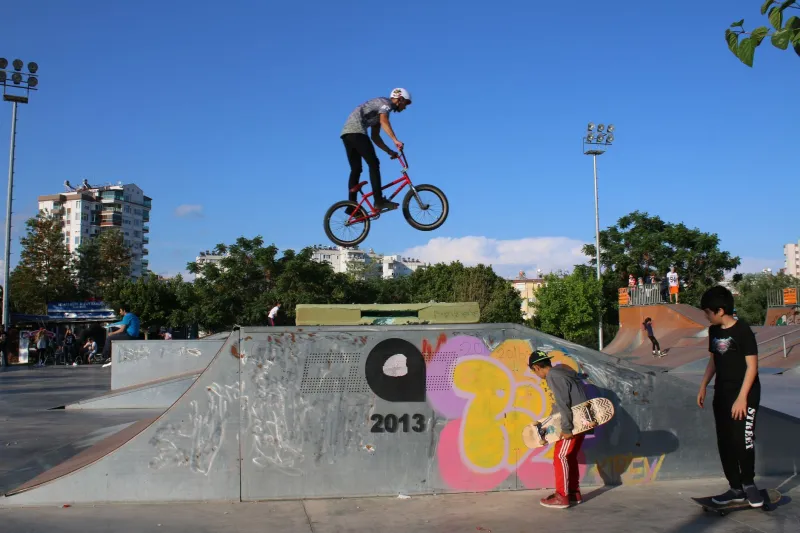
You've rolled up to that same gap a hundred times. You've watched your boys clear it without blinking. You know you can do it — your body knows the motion, your legs know the speed, your hands know exactly when to pull. And then something in your head just... shuts the whole thing down.
No bail. No crash. Just nothing. You pedal away and act like you were never going to try.
Mental blocks in BMX don't get talked about enough. In a culture that celebrates send-it energy and scars as badges of honor, admitting that your mind is the thing holding you back feels like weakness. But here's the truth: the mental side of progression might be harder than any concrete you'll ever hit.
It's Not About Being Scared — It's About Being Stuck
Fear is normal. Any rider who tells you they've never felt it is either lying or hasn't tried anything worth fearing. The problem isn't fear itself — it's when fear stops being a useful signal and starts being a wall.
There's a difference between your brain flagging genuine danger and your brain misfiring on a trick you've already got the ability to land. Coaches who work with competitive riders call this "protective inhibition" — your nervous system essentially overriding your conscious decision because it's catalogued a perceived threat, even when that threat isn't real anymore.
Riders who've been through serious injuries know this feeling intimately. You heal up, get back on the bike, and suddenly a trick you were doing in your sleep feels like the most dangerous thing in the world. The body is fine. The mind is still stuck at the moment of impact.
The Visualization Game Nobody Wants to Do
Ask most BMX riders what they think about visualization and you'll probably get a smirk. It sounds like something out of a self-help book, not something that belongs in a parking garage at midnight with a stack of pallets and a crew of dudes who think stretching is for soccer players.
But here's the thing — top-level riders have been doing it for years, they just don't always call it that.
Mental rehearsal — actually closing your eyes and riding the trick in your head, step by step, with all the detail you can muster — does something real to your brain. Neuroscience backs it up: the same neural pathways that fire when you physically perform a movement activate during detailed mental simulation. You're literally practicing without moving.
The key is specificity. Don't just picture yourself landing the trick. Picture the approach speed, the feel of the pedals, the exact moment of commitment, the landing impact, the rollaway. Make it uncomfortable. Make it real. The more honest your mental run-through, the more useful it is when you're actually rolling in.
Some riders journal their sessions — what they tried, what stopped them, what it felt like in the moment. It sounds corny until you start noticing patterns. Maybe you always hesitate on the same type of obstacle. Maybe your block shows up when certain people are watching. That information is gold.
Coaching the Mind, Not Just the Body
The BMX coaching world is small, but it's growing. And the coaches who are actually moving the needle aren't just teaching technique — they're teaching riders how to manage what's happening upstairs.
Breaking a trick down into smaller commitment steps is one of the most effective tools in the box. Instead of going from "I can't do this" to "I'm going to send it full speed," you build a bridge. You do the approach. Then you do the approach and commit to the first motion. Then you go a little further. Each small win rewires the threat response a little bit more.
This is sometimes called "progressive desensitization" in sports psychology circles, but on a BMX level it's simpler than that: you fake out your own fear by making the scary thing feel boring before you actually do it.
Having a trusted crew around matters more than people realize. Riding with people who will hype you up without pressuring you — who understand the difference between "you've got this" and "stop being a baby" — creates the kind of environment where riders actually push through blocks instead of just riding around them forever.
The Identity Trap
Here's a mental block nobody talks about: the one built out of ego.
When you've been riding for years and you've got a reputation in your local scene, there's enormous pressure to always be progressing, always be the one sending the gnarliest stuff. And that pressure can actually make mental blocks worse, because now you're not just scared of the trick — you're scared of what it means about you if you can't do it.
The riders who seem to have the healthiest relationship with fear are the ones who've separated their identity from their trick list. They ride because they love it, not because they need to prove something. That doesn't mean they don't push hard — it means when they hit a wall, they're not also dealing with a crisis of self-worth on top of it.
Progress in BMX has never been linear. The riders who stay in the game the longest know that. You'll have sessions where you feel untouchable, and you'll have weeks where nothing clicks. The mental block that shows up in one of those rough patches isn't a sign you've lost something — it's just part of the ride.
Sending It Starts in Your Head
Physical ability will only take you so far. Plenty of riders have the strength, the coordination, and the technical foundation to land tricks they've been circling for months or years. The thing standing between them and that next level isn't their body — it's the story their brain keeps telling them.
That story can be rewritten. Not overnight, and not without some discomfort. But the riders who put in the work on their mental game — who take visualization seriously, who build smart progression steps, who surround themselves with the right crew — those are the ones who keep leveling up long after the riders with raw talent have plateaued.
Fear doesn't go away. You just get better at riding through it.