Is Your Bike Fighting You? How Setup Is Secretly Sabotaging Your Riding
There's a moment almost every rider goes through. You've been grinding the same trick for weeks. You've watched the clips. You've done the mental reps. You know what your body is supposed to do, but the bike just won't cooperate. You blame your feet, your timing, your commitment. What you probably never blame is your top tube length.
Here's the thing — setup matters. A lot. And for most riders, especially those coming up through the scene without a mentor or a seasoned shop mechanic in their corner, the bike they're riding is actively working against the way they naturally move. That's not a skill problem. That's a geometry problem.
The Geometry Nobody Explains to You
BMX geometry sounds like something that only matters to engineers or pro riders with sponsors covering custom builds. In reality, it affects every single person who throws a leg over a bike.
Top tube length is the most talked-about spec, and for good reason — it dictates your reach and how centered you feel over the bike. Ride too long and you'll feel stretched out, especially when you're trying to pull the front end up quickly. Too short and you're cramped, which makes technical footwork messy and can torque your lower back over time.
But top tube is just the start. Head tube angle changes how your front wheel responds to steering input. A slacker angle gives you more stability at speed, while a steeper angle makes the bike feel snappier and more reactive — great for tech street, potentially sketchy at a fast park. Chainstay length affects how quickly the rear of the bike responds when you load the cranks. Shorter stays mean a more snappy, poppy feel. Longer stays settle the bike down and help with consistency.
None of this is secret knowledge. But very few riders are ever told to think about it when they're buying their first or second complete bike.
When the Bike Is Lying to You
Tyler Moss, a mechanic who's been wrenching at a BMX-focused shop in Phoenix for going on eight years, puts it plainly: "I see it constantly. Someone comes in frustrated, saying they can't land a certain trick, and within five minutes of looking at their setup I can tell you exactly why. Bar height too low, stem slammed forward, and they're wondering why they keep casing jumps."
Bar height and position might actually be the most underrated setup variable in the game. Your bars are the steering wheel, sure, but they're also the anchor point for your entire upper body. Bars that are too low force you to hunch, which shifts your weight forward — great for racing, rough for park riding where you need your hips mobile and your weight centered. Bars that are too high can make the bike feel like it's floating underneath you, which sounds fun until you're trying to stay locked in on a grind.
Stem length and rise work in tandem with bar height to determine your overall cockpit feel. Riders who've been on the same stem for years without questioning it are often shocked at what a quarter-inch of adjustment does to their confidence on the bike.
Andrea Flores, a rider out of the Chicago scene who's been competing and coaching for close to a decade, remembers her own turning point clearly. "I was riding a setup that was technically fine — nothing broken, nothing weird — but I kept washing out on flat-ground manuals. I thought I just wasn't strong enough. A friend watched me ride and immediately said my tire pressure was too high and my bars were pulling me forward. One afternoon of adjustments and I was holding manuals twice as long. I felt stupid for not figuring it out sooner, but nobody had ever told me to look there."
Weight Distribution and Why It's Everything
Your bike's weight distribution is a constant conversation between you and the machine. Every time you shift your hips, load the pedals, or lean into a turn, you're negotiating with physics — and if your setup is off, you're starting that negotiation at a disadvantage.
Heavy front ends make manuals and nose-up moves feel like a fight. Heavy rear ends can make the bike feel sluggish on flat ground and unpredictable when you need to pivot or spin. Wheel weight matters more than most riders think, because rotating mass — the weight that's spinning — has a disproportionate effect on how the bike accelerates and responds.
This is part of why experienced riders will often choose a slightly heavier frame with lighter wheels over the reverse. You feel wheel weight on every pedal stroke. Frame weight mostly just sits there.
Pegs, gyros, and added components all shift the balance equation too. Riders who run four pegs but primarily do front-peg grinds are carrying extra rear weight for no functional reason. Small stuff, but it adds up.
The Practical Checklist Nobody Gave You
If you've never done a real setup audit, here's where to start:
Bar height and angle. Stand over your bike in your natural riding stance. Your bars should feel like a natural extension of your arms, not something you're reaching down to or pulling up toward. Roll the bars forward or back slightly and test how it changes your posture.
Tire pressure. This one is wildly overlooked. Lower pressure gives you more grip and cushion but slows rolling speed. Higher pressure is faster but less forgiving. Most street riders run lower pressure than park riders. Experiment in a range of 80–110 PSI and pay attention to how the bike responds on landings.
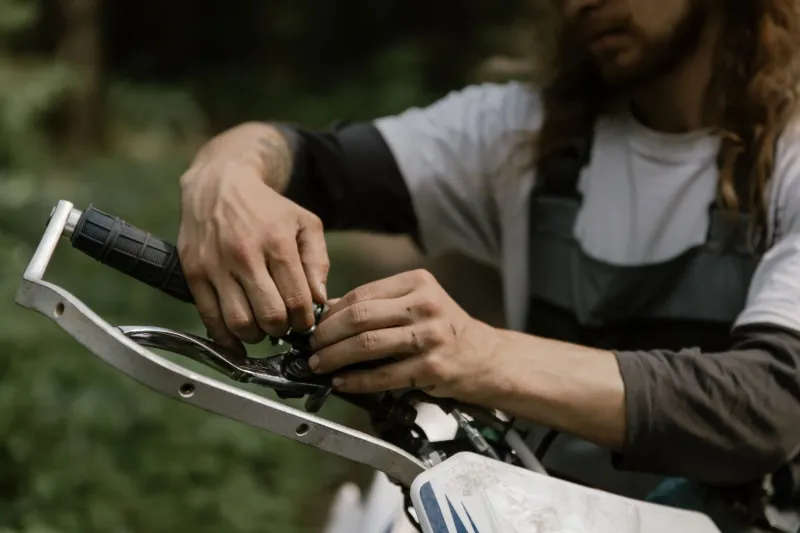
Brake lever position. If you run brakes, the lever angle affects how quickly you can modulate pressure under stress. It should require minimal wrist rotation to engage.
Seat height. Even if you never sit down while riding, seat height affects where the post sits relative to the frame and can change your ability to wedge your legs in certain positions during grinds or tech moves.
Crank length. Shorter cranks clear better on grinds and feel snappier. Longer cranks give more leverage for power. Most complete bikes come with 175mm cranks, but 170mm is worth trying if you do a lot of technical flatland or street work.
When Skill Takes Over From Setup
Here's the honest part: setup only takes you so far. At some point, the riders who progress are the ones who've developed enough body awareness to adapt to almost anything. Pro riders will hop on a random bike at a demo and make it look effortless because they've built such a refined sense of movement that minor geometry differences don't throw them off.
But that's the destination, not the starting point. Getting dialed in early builds the right muscle memory. Riding a setup that fights you builds compensations — weird habits, inefficient movements, and bad patterns that are genuinely hard to unlearn.
The goal of a good setup isn't to do the riding for you. It's to get out of the way so you can focus on actually progressing.
So before you spend another month blaming your wrists, your timing, or your mental game — spend an afternoon getting your bike right. Find a mechanic who rides. Ask questions. Make small adjustments and pay attention to what changes. The bike should feel like an extension of you, not something you're constantly fighting.
Ride hard. But ride smart first.