Skin, Savings, and Sacrifice: What Nobody Tells You About Getting Good at BMX
There's a version of BMX that lives on Instagram — the slow-motion whips, the perfect lighting, the crowd losing it in the background. Then there's the version that happens before all that. The version with blood on the concrete, a busted rim, and a hospital co-pay sitting on your kitchen table. If you're chasing sponsorships and wondering why it feels so far away, it might be because nobody sat you down and explained what the road between "learning to bunnyhop" and "getting flow product" actually looks like.
We did the work. We talked to riders across the country — amateurs, semi-pros, a few guys who've been knocking on the sponsor door for years — and got honest answers about the real cost of progression in BMX.
The Body Keeps Score
Ask any rider who's been at it for more than a couple years to show you their scars, and you'll be there a while. Marcus T., a 22-year-old amateur out of Phoenix, Arizona, has had two broken wrists, a fractured collarbone, and more road rash than he can remember. "The collarbone was the worst," he says. "I was trying to lock down a 360 tailwhip on a quarterpipe, came up short, and just went shoulder-first into the flat. That was six weeks off the bike and about $3,200 out of pocket after insurance."
That number — $3,200 — might shock people outside the scene. But riders barely flinch at it. Injuries aren't a question of if, they're a question of when and how bad. Broken wrists, separated shoulders, cracked ribs, torn ligaments — these aren't freak accidents. They're tuition.
Devin R., a 25-year-old semi-pro from Columbus, Ohio, who's been riding for over a decade, puts it plainly: "I've probably spent close to $15,000 on medical stuff since I started riding seriously. ERs, urgent care, physical therapy. I didn't have health insurance for two years in my early twenties, so I was just taping stuff up and hoping for the best." He laughs when he says it, but there's something real underneath the laugh — the quiet acknowledgment that this sport asks for a lot, and it doesn't always give it back.
The Gear Grind
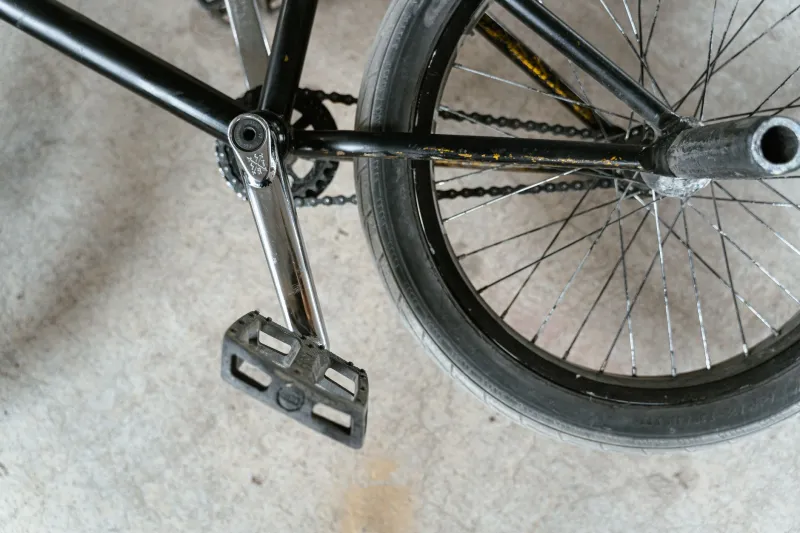
Beyond the medical bills, there's the constant, grinding expense of keeping a bike alive. BMX bikes take punishment, and parts don't last forever. Sprockets wear down. Chains snap. Pegs crack. Rims taco. And if you're riding hard — which is the whole point — you're replacing parts on a rotation that can feel almost rhythmic.
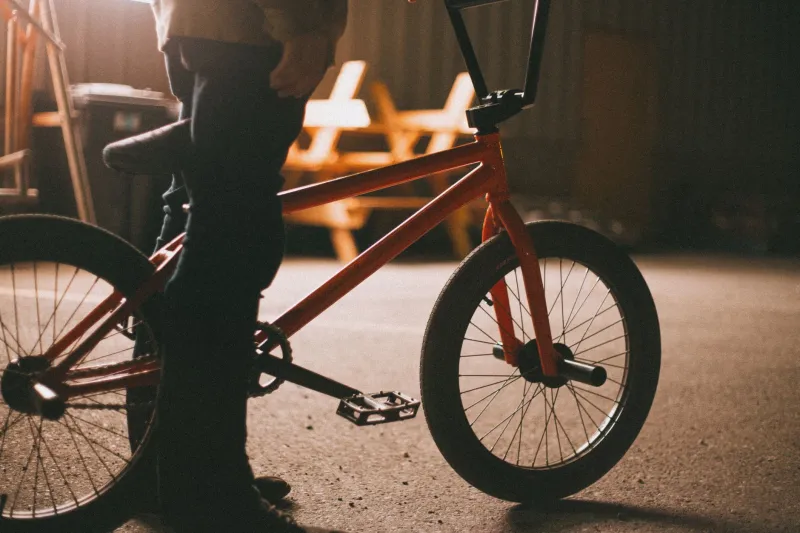
A solid complete bike capable of handling real progression starts around $400 to $500. But the riders who are serious aren't riding completes for long. They're building custom setups, swapping frames, hunting for the right fork geometry, spec'ing out exactly the right handlebar rise. A quality frame alone runs $250 to $500. Wheels? Another $150 to $300 for a decent pair. By the time you've built something you're genuinely proud of, you've likely dropped $800 to $1,500 or more — and that's before you start breaking things.
"I probably spend $100 to $150 a month just maintaining my bike," says Jaylen W., a 19-year-old amateur from Atlanta. "Tires, grips, chains, a peg here and there. It adds up fast. And that's not counting when I actually wreck something major." Jaylen works part-time at a skate shop to fund his riding, a setup that's basically a rite of passage in this culture.
Time Is the Tax Nobody Talks About
Money and injuries get discussed. Time doesn't. But the commitment of hours required to actually get good at BMX is staggering. Riders who are progressing aren't at the park for an hour on weekends. They're there every day, or close to it. They're watching footage, studying how tricks are done, visualizing the approach, talking to other riders about technique. It's not casual.
Marcus says he rides five or six days a week when he's healthy. "I wake up and my first thought is what I'm going to work on that day. My second thought is whether anything hurts too much to ride." That kind of dedication costs you socially, professionally, and personally. Friendships with non-riders drift. Jobs that require weekend availability become obstacles. Relationships take work to maintain when your priority is always the next session.
For riders chasing sponsorships specifically, there's an added layer: content creation. Sponsors don't just want good riders anymore — they want riders who can document themselves, edit clips, grow followings, and represent a brand with consistency. That means adding hours of filming, editing, and posting to an already packed schedule. "I feel like I spend almost as much time on my phone as I do on my bike some weeks," Devin admits. "And I hate that, but it's just the reality right now."
The Sponsorship Math
So what does all of this sacrifice actually lead to? For most riders, the first taste of sponsorship is a flow deal — free or discounted product from a smaller brand in exchange for visibility. It's not money. It's a free frame or a set of bars. It's meaningful, but it doesn't pay the rent.
Actual paid sponsorships — the kind where a brand cuts you a check — are rare. There are only so many spots, and the competition is steep. Riders with massive social followings sometimes leapfrog technically superior riders simply because they bring eyeballs. It's a reality that frustrates the grind-it-out crowd but is increasingly hard to argue with from a business standpoint.
Jaylen is philosophical about it. "I'm not riding for the money. I'm riding because I love it. But yeah, it would be nice if the investment started coming back a little." He's been riding for four years, has a small but growing presence online, and recently got his first flow deal with a mid-size parts brand. "Getting that first package in the mail — even just stickers and a set of grips — felt like validation. Like, okay, someone sees what I'm doing."
Marcus is a little more guarded. "I've seen guys who are way better than me get overlooked because they don't post enough. And I've seen guys who aren't that technical get picked up because they're funny on camera. It messes with your head if you let it."
Riding Anyway
Here's the thing about all of this — the hospital bills, the busted parts, the hours, the social media hustle, the sponsorship uncertainty — riders keep going anyway. Not because they're naive about the cost, but because the feeling of landing something you've been working on for weeks is genuinely unlike anything else. It's not rational. It's not a business decision. It's a compulsion that people either understand or they don't.
Devin, who's been doing this long enough to have a clear-eyed view, sums it up well: "I could've taken everything I spent on BMX and put it into something sensible. But I'd be miserable. This is who I am. The scars, the bills, all of it — that's just what it costs to be a rider. I'm good with that."
If you're just starting out or you're a few years in and wondering if the grind is worth it, there's no clean answer. The cost is real. The path is hard. But so is the culture, and that's exactly why it's worth something.