Off the Map: A Street Rider's Guide to Uncovering Hidden BMX Spots Before They're Gone
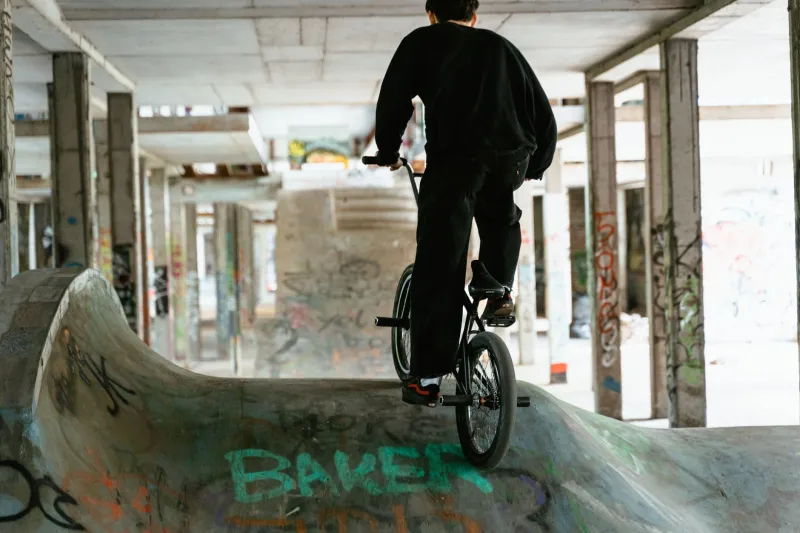
Somewhere in your city right now, there's a perfect manual pad sitting behind a shuttered warehouse. There's a sketchy but rideable bank-to-curb setup in an industrial lot nobody drives through anymore. There's a parking garage on the edge of downtown that floods on the third floor every time it rains, leaving behind this impossibly smooth concrete that would make you cry if you saw it.
You just haven't found it yet.
That's the whole game for a certain breed of BMX rider — not chasing clout at the spots everybody already knows, but putting in the legwork to discover something nobody's touched. It's part urban exploration, part local history lesson, part obsessive habit. And the riders who do it best will tell you the same thing: no algorithm is going to hand you the good stuff.
Why Instagram Will Always Be One Step Behind
Here's the thing about a spot going viral — the moment it does, it's already on borrowed time. Somebody films a banger there, posts it, and within a few weeks you've got a hundred riders showing up, security getting called, and property management finally deciding to bolt down those ledges they've been ignoring for years.
Dallas-based rider and longtime spot hunter Marcus Webb has watched it happen more times than he can count. "The second a spot gets tagged on social, the clock starts," he says. "I've seen places get waxed ledges turned into anti-skate knobs inside of a month after a video blows up. You're basically reporting your own treasure."
That's not to say you should never film at a spot. But the riders who treat spot hunting as a serious craft know that local knowledge — the kind you build by actually walking your city — has a shelf life that a viral clip never will. You know the security guard's schedule. You know which spots are technically private but never patrolled. You know the back entrance. That stuff doesn't live on Google Maps.
How to Actually Start Finding Spots
The process isn't complicated, but it does take time and a willingness to look like a weirdo walking around industrial zones on a Tuesday afternoon.
Get on foot first. Seriously — leave the bike at home for at least one dedicated scouting session. You move slower, you notice more, and you don't look like you're about to start doing tricks on private property. Walk neighborhoods you've driven through a hundred times but never really seen. Check out the edges of downtown, older commercial strips, and anywhere there's been recent demolition or construction.
Learn to read Google Maps like a spot hunter. Satellite view is your best friend. Look for large flat surfaces, rooftop parking structures, loading docks, and anything that looks like it might have interesting transitions or ledge setups. Switch between satellite and street view to get a ground-level read before you even leave the house.
Talk to older locals. This one's underrated. The older guys at your local shop — the ones who've been riding your city for fifteen or twenty years — have a mental catalog that no app can replicate. Buy one of them a coffee and ask about spots they used to hit. Half of those places still exist in some form.
Follow demolition and development news. Construction sites create accidental gold. Cleared lots, temporary concrete pours, and half-finished structures can be incredible for a limited window. Local subreddits, city planning commission sites, and neighborhood Facebook groups (yes, really) are weirdly good sources for this kind of intel.
The Art of Reading a Spot
Finding a spot is only half the equation. Knowing whether it's actually worth riding — and figuring out how to work it — is a skill that takes time to develop.
Chicago rider and self-described "concrete archaeologist" Deja Simmons puts it this way: "A spot doesn't have to be perfect to be great. Half the spots I love are broken in some way — a crack here, a rough patch there. You learn to work around it. That's part of what makes it yours."
When you find something promising, walk the whole space before you unpack your bike. Check the surface for glass, gravel, and drainage patterns. Look at the light — afternoon shadows can hide gaps and cracks that'll send you over the bars. Figure out what time of day the spot gets foot traffic, and whether there are any natural sightlines that make you visible from the street.
And be honest with yourself about what the spot actually is. Not every ledge is a perfect wax job waiting to happen. Sometimes the best thing a spot has going for it is a good run-up and a solid landing zone. Work with what's there.
Protecting What You Find
This is where a lot of riders drop the ball. You put in the work to find something special, and then you blow it up on social media or let it get trashed, and six months later it's gone.
The unwritten rule among serious spot hunters is simple: you earn the right to share a spot by respecting it. That means cleaning up after every session, not over-saturating it with riders, and being thoughtful about who you bring. If a spot is on private property — and let's be real, a lot of the best ones are — that means not pushing your luck on frequency, and having a plan for when someone asks you to leave.
Some crews have started quietly documenting spots through private channels — shared photo albums, encrypted group chats, even hand-drawn maps — to preserve the knowledge without broadcasting it to the internet. It sounds paranoid until you've watched three great spots disappear in a single year.
"We've got a running document," says Webb. "Spots we've found, rated, and noted. Some of them have been gone for years, but at least we've got the memory. And some of them we're still sitting on because they're too good to risk."
The Bigger Picture
There's something deeper going on with spot hunting that goes beyond just finding places to ride. It's about having a real relationship with your city — knowing it in a way that most people never bother to. You start to see the urban landscape differently. Every parking structure is a possibility. Every empty lot is a question.
That kind of connection to place is part of what makes BMX culture different from sports that exist inside designated facilities. The street is the venue, and the street is always changing. Spots appear and disappear. Cities evolve. The riders who stay plugged into that process — who keep scouting, keep exploring, keep talking to locals — are the ones who always seem to have somewhere new to ride.
So yeah, keep scrolling Instagram for inspiration. But the real treasure is out there, waiting to be found by whoever's willing to walk for it.
Go find your city. It's got more to offer than you think.