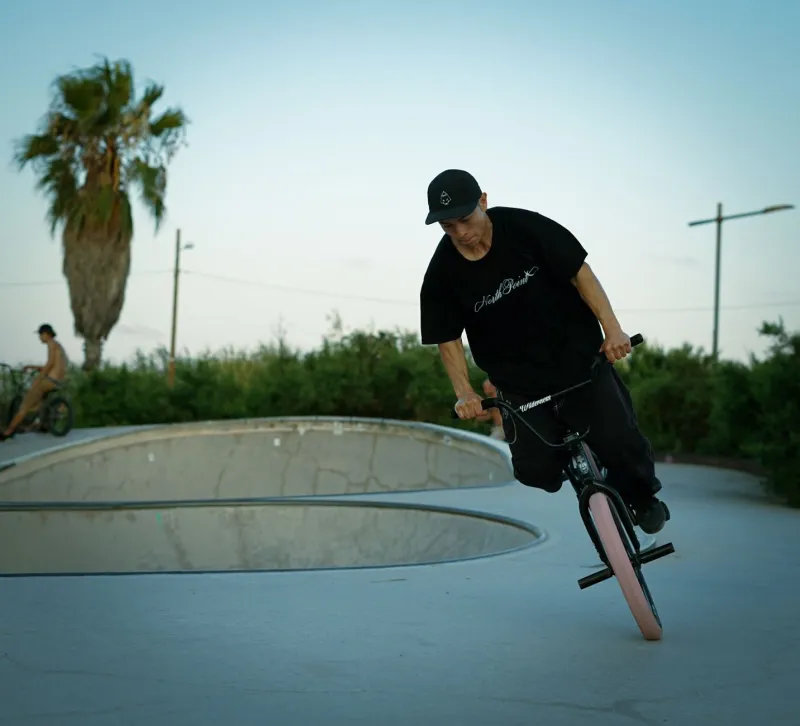
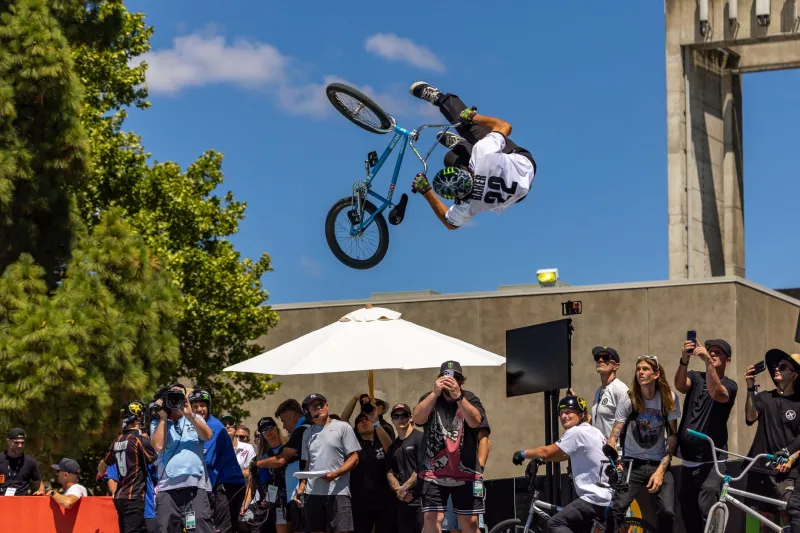
Log Off and Ride: Why BMX Is the Last Real Thing Left
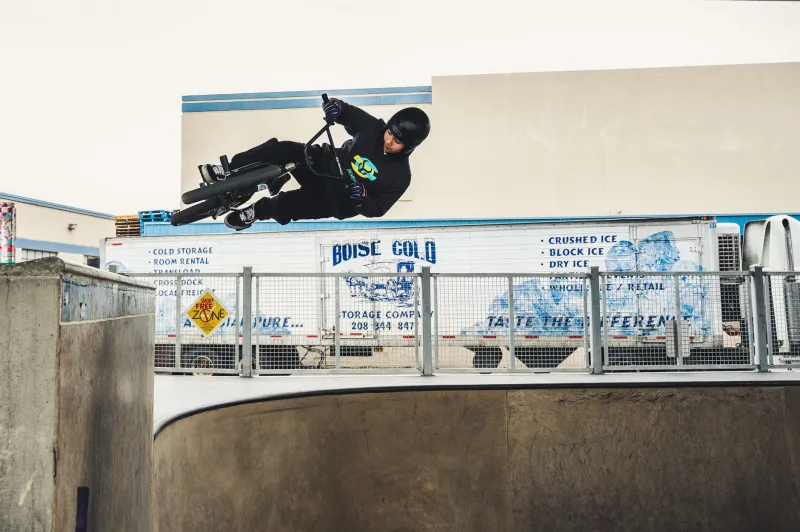
Let's be straight about something. The internet has made a lot of things easier and a lot of things worse. Finding a new spot? Easier. Watching footage from riders across the world? Easier. Actually connecting with another human being in a way that means something? Somehow, a lot harder.
We live in a moment where authenticity is a brand strategy. Where vulnerability is a content format. Where the most carefully constructed version of a person gets packaged and distributed for engagement metrics. And somewhere in the middle of all that noise, there are people out there waxing a curb, arguing about whether a barspin counts if your feet came off the pedals, and sweating through a three-hour session trying to land something that doesn't care at all about their follower count.
That's BMX. And right now, it might be the most honest thing going.
The Algorithm Doesn't Know What a Good Session Feels Like
Here's the thing about algorithm culture: it rewards performance, not experience. It optimizes for the reaction, not the reality. A clip that goes viral isn't necessarily the best riding — it's the riding that triggers the right emotional response at the right moment in the feed. That's a completely different metric than what matters at the spot.
At the spot, nobody cares how many followers you have. Nobody's going to move out of the way for your setup shot. The ledge doesn't grade on a curve. You can't A/B test a manual. The feedback loop is immediate, physical, and brutally honest — you either made it or you didn't, and the concrete doesn't lie.
There's something deeply clarifying about that. In a culture saturated with manufactured relatability and strategic oversharing, BMX offers something genuinely rare: a space where the only currency is what you can actually do.
The Crew Is Not a Network
One of the things that gets lost in the translation of BMX culture to social media is the texture of what it actually feels like to have a crew. Not a following. Not a community in the abstract sense that brands love to invoke. An actual group of people you ride with, argue with, push, and get pushed by.
The crew dynamic is built on proximity and repetition. You show up. You keep showing up. You bail together, you hype each other up, you give each other grief when it's warranted. Trust gets built through shared experience, not through mutual engagement on posts.
That's a fundamentally different kind of relationship than what social media facilitates. Online, you can maintain the appearance of connection with very little actual investment. In a crew, you can't fake showing up. You can't ghost a session and expect it to go unnoticed. The accountability is real because the relationships are real.
This is not a nostalgic argument for the way things used to be. It's an observation about what BMX still is, right now, for the people who are actually in it. The crew hasn't been replaced by the group chat. The session hasn't been replaced by the comment section. These things coexist, but they're not equivalent.
Skill Is Not Content
Something uncomfortable happens when you start treating everything as content. The process — the learning, the failing, the grinding, the slow accumulation of ability — gets collapsed into a highlight reel. And when that happens, the process starts to feel less valuable than the product.
BMX has always been a culture built on process. Learning a trick takes weeks, sometimes months. There's no shortcut, no hack, no workaround. You have to put in the time on the bike, absorb the falls, make micro-adjustments, and eventually — if you stay with it — something clicks. That's a different relationship with difficulty than most of modern life encourages.
When you're deep in that process, the last thing on your mind is how it's going to look on camera. You're focused on body position, timing, commitment. The experience is entirely internal. And that interiority — that absorption in something real and difficult — is increasingly hard to come by.
We should protect it.
Using Digital Tools Without Letting Them Use You
This isn't an anti-technology manifesto. Phones, social media, and digital platforms have genuinely expanded what's possible for BMX culture. Riders in small towns can access world-class footage and connect with the global scene in ways that weren't possible twenty years ago. Events get promoted, spots get discovered, and communities get built across geographic distances. That's real value.
The problem isn't the tools. It's the relationship with the tools. When the clip becomes more important than the session, something's off. When you're staging angles before you've even warmed up, something's off. When the goal is the content rather than the riding, you've inverted the thing that makes BMX worth doing.
The healthiest version of digital engagement for BMX culture looks like this: the session comes first, always. Document what happens naturally. Share what feels true. Use the platforms as an extension of the culture, not as the destination.
And then log off and go ride.
The Manifesto
BMX doesn't need to be saved from social media. But it does need riders who are willing to be intentional about what they're doing and why. The culture is strong because it's built on something real — real skill, real community, real consequence. That foundation doesn't erode unless we let it.
So here's what we're putting out there: prioritize the session. Invest in your local crew. Learn something hard for the sake of learning it. Show up to the spot without a content plan. Let the riding be the point.
The algorithm will still be there when you get back. The concrete, the crew, and the feeling of landing something you've been working on for weeks — that's what you're actually here for.
Ride hard. Live free. Rep the culture. And mean it.